
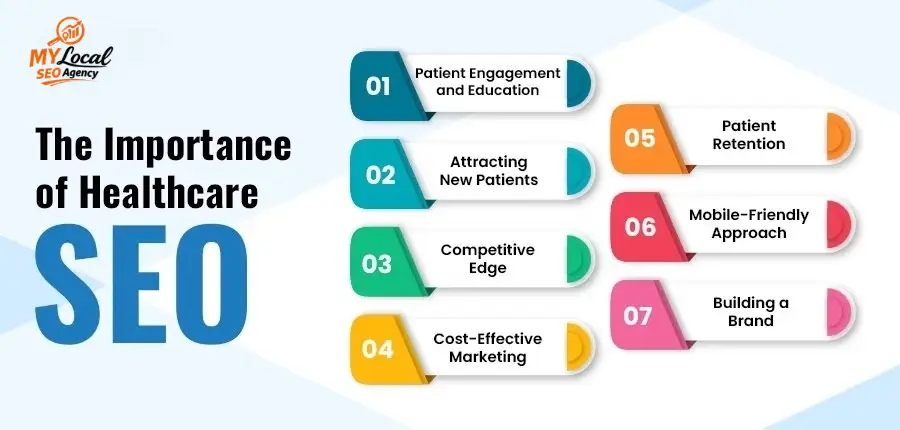
The healthcare industry is becoming increasingly competitive in the digital world. Patients now search online before choosing doctors, hospitals, and medical services. Therefore, healthcare businesses need a strong online presence to attract potential patients.
SEO for healthcare helps medical businesses improve search visibility and reach people searching for healthcare services. It connects patients with relevant medical information and qualified healthcare providers. Moreover, it helps medical practices build trust before patients schedule appointments.
However, healthcare websites require more than basic keyword optimisation. They need accurate medical information, technical performance, and strong online credibility. A successful strategy combines useful content, local visibility, and a positive website experience.
Whether you operate a hospital, clinic, private practice, or healthcare company, SEO matters. It can help you reach relevant audiences and generate consistent organic traffic.
This guide explains practical healthcare SEO strategies, important optimization methods, and emerging trends. You will also learn how medical businesses can compete effectively in 2026.
What Is SEO in Healthcare?
Healthcare SEO refers to optimising medical websites for search engines. Its purpose involves improving rankings for relevant healthcare-related searches.
For example, patients might search for these services:
- Primary care doctor near me
- Best cardiologist in Chicago
- Medical billing services in Texas
- Urgent care clinic near me
- Paediatrician accepting new patients
- Physical therapy services nearby
Search engines analyse website content, relevance, technical performance, and other signals. They then display relevant pages for different search queries.
A properly optimised website helps patients discover medical services more easily. It also provides useful information before patients make healthcare decisions.
Why Healthcare SEO Is Different
Healthcare websites handle sensitive subjects that affect people’s health and well-being. Therefore, accuracy and credibility are especially important.
Google considers experience, expertise, authoritativeness, and trustworthiness when evaluating content quality. These concepts are commonly known as E-E-A-T.
Healthcare content should demonstrate appropriate medical expertise. Qualified professionals should review important medical information before publication.
For example, a medical website publishing diabetes information needs accurate clinical details. It should also identify its authors and provide trustworthy references.
Google gives additional importance to trust for content affecting health and safety. Therefore, healthcare businesses should prioritise reliable information over keyword-heavy articles.
Why SEO for Healthcare Is Important in 2026
Patients increasingly use search engines to research healthcare providers. They compare services, locations, qualifications, and patient experiences before making decisions.
Consequently, healthcare businesses need strong digital visibility. A website that cannot attract organic visitors may miss valuable opportunities.
Here are several important benefits.
1. Attract More Potential Patients
Search optimisation helps medical practices appear for relevant patient searches. It connects your services with people actively looking for healthcare assistance.
For example, a dentist can target searches related to dental implants. Similarly, a dermatology clinic can optimise pages for acne treatment.
These targeted searches can attract visitors with specific healthcare needs.
2. Build Trust and Credibility
Patients want reliable information before selecting healthcare providers. A professional website can help establish confidence.
Publish educational articles, introduce qualified providers, and explain available treatments. Also, display genuine patient feedback where appropriate.
Clear contact information and transparent service descriptions improve credibility.
3. Generate Consistent Organic Traffic
Paid advertising requires continuous spending to maintain visibility. Organic search can generate visitors without paying for every click.
However, SEO requires ongoing investment and maintenance. Rankings can change because of competition and search algorithm updates.
A consistent content strategy can support long-term website growth.
4. Improve Local Patient Acquisition
Many patients prefer healthcare providers within convenient driving distance. Therefore, location-based optimisation is essential for clinics and private practices.
Local search visibility helps businesses appear in relevant nearby searches. Accurate business information also makes contacting providers easier.
5. Strengthen Brand Awareness
Publishing useful healthcare information introduces your brand to new audiences. Visitors may remember your business when they need medical services.
Even when someone does not schedule immediately, helpful content builds familiarity. This can support future patient acquisition.
Four Types of SEO for Healthcare Websites
Understanding different SEO categories helps businesses develop balanced optimisation strategies.
There are four commonly recognized types of SEO. Each category addresses a different part of website performance.
1. On-Page SEO
On-page SEO improves individual website pages and their content. It helps search engines understand each page’s purpose.
Important activities include:
- Optimizing page titles and meta descriptions.
- Using relevant primary and secondary keywords.
- Creating clear H1, H2, and H3 headings.
- Improving internal linking.
- Writing useful and original content.
- Adding descriptive image alt text.
- Optimizing URLs for readability.
For example, a cardiology clinic can create a dedicated heart health service page. That page should explain treatments, provider qualifications, and appointment options.
2. Off-Page SEO
Off-page SEO improves website authority through external signals. It includes activities performed outside your website.
Common methods include:
- Earning relevant backlinks.
- Building healthcare industry partnerships.
- Getting listed in reputable directories.
- Publishing expert contributions.
- Developing relationships with medical organizations.
- Maintaining a consistent brand presence.
Quality matters more than backlink quantity. Links from relevant and trustworthy websites can support your authority.
3. Technical SEO
Technical SEO improves how search engines crawl, understand, and index websites. It also improves website usability and performance.
Important activities include:
- Improving website loading speed.
- Fixing broken links.
- Creating XML sitemaps.
- Checking robots.txt settings.
- Implementing HTTPS.
- Improving mobile responsiveness.
- Resolving duplicate content issues.
- Fixing indexing errors.
- Implementing appropriate structured data.
A technically healthy website provides a better foundation for organic visibility.
4. Local SEO
Local SEO improves visibility in location-based searches. It helps nearby patients discover medical practices and healthcare facilities.
For example, a patient might search for a family doctor in Dallas. Search engines may display nearby practices and relevant map results.
Important activities include location pages, business listings, reviews, and accurate contact details.
These four categories work together. Neglecting one area can limit the overall performance of your website.
Key Optimisation Methods for Healthcare Websites
Healthcare websites need a structured approach to optimisation. The following methods help improve relevance, usability, and search visibility.
| Optimization Method | What It Includes | Expected Benefit |
| Keyword Research | Finding relevant medical and location-based searches | Targets qualified visitors |
| Content Optimization | Improving service pages and educational articles | Increases topical relevance |
| Technical SEO | Fixing speed, indexing, and website issues | Improves search accessibility |
| On-Page Optimization | Titles, headings, URLs, and internal links | Improves page relevance |
| Off-Page SEO | Earning quality backlinks and brand mentions | Supports website authority |
| Local SEO | Business profiles and location pages | Improves local visibility |
| Review Optimization | Encouraging genuine patient feedback | Builds online credibility |
| Mobile Optimization | Improving mobile usability | Creates better patient experiences |
Keyword Research for Medical Practices
Keyword research identifies the phrases potential patients use. It helps businesses understand search demand and user intent.
Start by identifying your primary medical services. Then research related conditions, treatments, specialities, and locations.
Consider these examples:
| Medical Specialty | Example Keywords | Search Intent |
| Cardiology | Cardiologist near me | Finding a provider |
| Dentistry | Dental implants in Houston | Comparing treatment services |
| Dermatology | Skin specialist near me | Finding a specialist |
| Orthopedics | Knee pain treatment clinic | Finding treatment |
| Pediatrics | Paediatrician in Chicago | Finding a doctor |
| Physical Therapy | Physical therapy near me | Finding local services |
Use keyword research tools to evaluate search volume and competition. Also, examine search results to understand what Google currently rewards.
Avoid targeting unrelated keywords simply because they have higher search volume. Relevant visitors are more valuable than unqualified traffic.
Optimise Medical Service Pages
Every important healthcare service should have a dedicated landing page. This helps patients understand individual treatments and available services.
For example, a dental clinic might create separate pages for:
- Dental implants
- Teeth whitening
- Root canal treatment
- Cosmetic dentistry
- Emergency dental care
Each page should explain its service clearly. Include relevant benefits, treatment information, and appointment instructions.
Avoid copying identical content across multiple service pages. Instead, provide useful details specific to each treatment.
Local SEO for Healthcare Providers
Local search visibility plays an important role in patient acquisition. Most patients prefer accessible healthcare services within their communities.
Therefore, healthcare businesses should develop strong location-based optimization.
Optimize Your Google Business Profile
A complete Google Business Profile helps patients find essential business information.
Include the following details:
- Correct business name.
- Accurate business address.
- Updated phone number.
- Appropriate business categories.
- Operating hours.
- Website address.
- Relevant photographs.
- Available healthcare services.
Keep all information accurate and consistent. Incorrect contact details can create confusion and reduce patient confidence.
Target Near Me Medical Searches
Patients frequently use location-based searches when looking for healthcare services.
Examples include:
- Dentist near me
- Urgent care near me
- Paediatrician near me
- Eye specialist near me
- Medical clinic near me
Create useful location pages for the areas you genuinely serve. Include relevant services, provider information, and local contact details.
Avoid creating hundreds of nearly identical city pages. Such pages provide little value when they lack unique information.
Manage Patient Reviews and Testimonials
Online reviews influence how potential patients evaluate medical practices.
Encourage satisfied patients to share honest feedback. Never offer misleading incentives or pressure patients into positive reviews.
Respond professionally to reviews while protecting patient privacy.
Google Review Management also helps businesses monitor feedback and identify service improvements.
Remember that public responses should never confirm someone’s patient relationship. Avoid discussing diagnoses, appointments, or treatment details.
Work With a Local SEO Specialist
Some medical practices need professional assistance with local visibility. A Local SEO Specialist can evaluate location-based competition and identify improvement opportunities.
Their work may include business profile optimisation, citation consistency, local keyword research, and review monitoring.
However, healthcare businesses should always maintain accurate information. Local rankings depend partly on relevance, distance, and prominence.
Best Tools and Practices for Healthcare SEO
The right tools help businesses measure performance and identify optimisation opportunities.
Use the following tools for different SEO activities.
| Tool | Main Purpose | Practical Application |
| Google Search Console | Search performance monitoring | Track impressions, clicks, and indexing |
| Google Analytics 4 | Website analytics | Measure traffic and conversions |
| Google Business Profile | Local business visibility | Manage business information |
| Ahrefs | Backlink and keyword research | Analyse competitors and opportunities |
| Semrush | SEO research and auditing | Evaluate keywords and website health |
| Screaming Frog | Technical website crawling | Identify broken links and page issues |
| PageSpeed Insights | Website performance | Measure loading and usability |
| Google Keyword Planner | Keyword research | Discover keyword ideas and demand |
Monitor Website Performance
Tracking results helps businesses understand whether their strategy works.
Monitor these important metrics:
- Organic traffic.
- Keyword rankings.
- Search impressions.
- Click-through rates.
- Appointment form submissions.
- Phone calls from organic visitors.
- Landing page performance.
- Qualified patient inquiries.
Do not measure success through rankings alone. Actual conversions provide a clearer picture of business performance.
Use Healthcare Content Strategically
Content marketing helps medical websites answer patient questions. It also supports topical authority across relevant healthcare subjects.
Create content around services, conditions, prevention, and treatment information.
For example, a cardiology website might publish:
- Common symptoms of heart disease.
- When to consult a cardiologist.
- Understanding blood pressure readings.
- Heart health screening options.
- Lifestyle changes supporting cardiovascular health.
Have qualified professionals review medical content. Include credible references and update outdated information.
How to Create an Effective Healthcare Marketing Strategy
A strong healthcare marketing strategy connects SEO with patient needs. It should support visibility, trust, engagement, and measurable business growth.
Follow these practical steps.
Step 1: Understand Your Target Audience
Identify the patients or healthcare customers you want to reach.
Consider their locations, healthcare needs, and common search behaviour. Also, understand which services your business wants to promote.
For example, a family clinic may target local families. A medical billing company may target independent physicians and healthcare organisations.
Different audiences require different keywords and content approaches.
Step 2: Perform a Complete Website Audit
Review your website before implementing major changes.
Check technical issues, existing content, indexing, page structure, and backlink quality.
Identify pages with poor traffic or weak engagement. Prioritise problems that affect important landing pages.
An SEO Audit also helps identify opportunities competitors may be overlooking.
Step 3: Develop a Content Plan
Build a content calendar around relevant services and patient questions.
Prioritise important service pages before publishing numerous general articles.
Create supporting educational content that naturally connects to your services.
Use internal links to guide visitors toward relevant pages. Make sure every article provides genuine value.
Step 4: Improve On-Page and Off-Page Optimisation
Optimise page titles, headings, descriptions, images, and internal links.
Then strengthen website authority through relevant industry relationships and quality backlinks.
Avoid buying large quantities of low-quality links. Focus on editorial relevance and genuine business connections.
Step 5: Improve Local Visibility
Update business listings and location information. Make sure your website includes accurate contact details.
Create useful location pages for your actual service areas. Encourage genuine reviews through appropriate patient communication.
Step 6: Measure and Improve Results
Review performance every month. Compare organic traffic, conversions, and keyword visibility.
Identify pages that generate relevant inquiries. Improve underperforming pages using actual search and conversion data.
SEO requires continuous improvement rather than one-time optimisation.
Common Mistakes in Healthcare SEO
Many healthcare websites struggle because of avoidable optimisation mistakes.
The following table highlights common problems and their practical solutions.
| Common Mistake | Why It Creates Problems | Recommended Solution |
| Keyword Stuffing | Makes content unnatural and difficult to read | Use keywords naturally |
| Duplicate Content | Provides little unique value | Create original page content |
| Ignoring Local Search | Misses nearby patient opportunities | Optimise local business information |
| Slow Website Speed | Creates a poor user experience | Improve loading performance |
| Missing Medical References | Weakens content credibility | Use trustworthy medical sources |
| Poor Mobile Design | Makes navigation difficult | Improve mobile responsiveness |
| Buying Spam Backlinks | Creates unnecessary SEO risks | Earn relevant, quality links |
| Ignoring Patient Reviews | Leaves reputation concerns unanswered | Monitor feedback professionally |
| Outdated Medical Information | Can mislead visitors | Review and update content regularly |
| Missing Conversion Tracking | Makes results difficult to measure | Track calls and appointment inquiries |
Why Medical Accuracy Matters
Healthcare content can influence important personal decisions. Incorrect information can damage credibility and potentially harm readers.
Avoid publishing unsupported medical claims. Do not promise guaranteed treatments or medical outcomes.
Identify qualified reviewers for clinical articles. Display relevant author qualifications and publication dates.
Update information whenever medical guidance changes.
SEO Services for Healthcare Businesses
Professional SEO support can help healthcare organisations improve their online presence. Different businesses require different strategies depending on their services and locations.
For example, hospitals may need large-scale content optimisation. Private practices may prioritise local search and appointment inquiries.
Medical billing companies require another approach. Their SEO strategy should target healthcare organisations seeking revenue cycle management and billing support.
What Do Professional Healthcare SEO Services Include?
Professional SEO services for healthcare may include:
1. Keyword Research
Research relevant keywords based on services, specialities, and search intent. Identify opportunities with realistic competition and qualified traffic potential.
2. On-Page SEO
Improve website content, page titles, headings, internal links, and metadata. Make important service pages easier to understand.
3. Technical SEO
Resolve crawling, indexing, speed, mobile usability, and website structure problems. Maintain a technically healthy website.
4. Off-Page SEO
Build relevant backlinks and strengthen brand authority. Focus on trustworthy websites and meaningful industry relationships.
5. Local SEO
Improve location-based visibility through business listings and local landing pages. Help potential customers discover nearby healthcare services.
6. Google Review Management
Monitor online feedback and encourage authentic patient experiences. Maintain professional communication without exposing private patient information.
7. Content Marketing
Publish educational articles, service descriptions, and useful healthcare resources. Build topical relevance through consistent publishing.
8. SEO Reporting
Track keyword performance, organic visitors, conversions, and technical improvements. Use actual data to guide future decisions.
SEO for Different Healthcare Businesses
Not every healthcare organisation targets the same audience. Their websites need strategies based on business objectives.
SEO for Hospitals and Healthcare Systems
Hospitals often offer multiple specialities and medical departments. Their websites need clear navigation and detailed service information.
Create dedicated pages for departments, specialists, and treatments. Optimise location information for each legitimate facility.
Hospital digital marketing should also include useful educational resources. These resources help patients understand available services.
SEO for Private Medical Practices
Private practices generally need local visibility and appointment inquiries.
Optimise doctor profiles and speciality pages. Include accurate qualifications, office hours, and contact information.
Publish relevant articles answering common patient questions. Make appointment booking simple across mobile devices.
SEO for Medical Billing Companies
Medical billing companies target a different audience. Their potential customers include physicians, medical practices, and healthcare organisations.
Their content should explain billing processes and business benefits.
Useful topics include:
- Medical billing services.
- Revenue cycle management.
- Medical coding services.
- Claims denial management.
- Accounts receivable follow-up.
- Medical credentialing services.
- Healthcare revenue optimisation.
For example, USA RCM Solutions can target medical practices seeking reliable billing support. Its website can publish educational resources related to billing and coding.
Service pages should explain the company’s expertise and available solutions. Clear calls to action can encourage qualified healthcare businesses to request consultations.
SEO for Healthcare Providers
Healthcare providers need informative websites that answer patient questions. Their content should communicate expertise without overwhelming visitors.
Include provider biographies, service details, qualifications, and contact information.
Also, create separate pages for important treatments and specialities. This structure helps patients find relevant information more easily.
Can ChatGPT Do SEO?
Yes, ChatGPT can support many SEO activities. However, it cannot replace a complete SEO strategy or professional judgment.
It works best as an assistant for research, planning, content development, and analysis.
SEO Tasks ChatGPT Can Help With
ChatGPT can assist with:
- Generating keyword ideas.
- Creating article outlines.
- Writing meta descriptions.
- Suggesting SEO titles.
- Developing FAQ ideas.
- Improving existing content.
- Finding internal linking opportunities.
- Creating content calendars.
- Drafting service page descriptions.
- Explaining technical SEO problems.
For example, you can ask ChatGPT to develop an article outline targeting medical billing services.
It can organise topics and suggest related search terms. You should still verify keyword metrics using professional tools.
What ChatGPT Cannot Replace
ChatGPT does not independently guarantee search rankings. It also cannot automatically verify every medical statement.
Human review remains important for healthcare content. Qualified professionals should validate clinical information.
SEO experts must also evaluate competition and actual website performance. Technical implementation requires appropriate tools and website access.
Use AI to improve productivity, not to publish unreviewed content at scale.
Is SEO Dead or Evolving in 2026?
SEO is not dead in 2026. However, search behaviour and search experiences continue evolving.
Google now offers AI-powered search experiences alongside traditional results. Users increasingly ask longer questions and expect direct answers.
This creates new opportunities for healthcare websites. Businesses can reach audiences through traditional listings and AI-supported search experiences.
Google’s published guidance continues to emphasise foundational SEO practices. Helpful content, technical accessibility, and reliable information remain important.
Healthcare businesses should therefore adapt rather than abandon SEO.
How Search Is Changing
Patients may now search for detailed questions instead of short keywords.
For example, someone might ask:
- Which cardiologist treats irregular heartbeat?
- What should I expect during my first dental appointment?
- Which urgent care clinics accept my insurance?
- Where can I find a pediatric specialist nearby?
Websites should answer these questions clearly and accurately.
However, businesses should not create content solely to appear in AI-generated answers. Useful information and genuine expertise remain more important.
Future Trends in Healthcare SEO
Healthcare search optimisation will continue developing as technology changes. Businesses should prepare for these trends without abandoning proven SEO practices.
| Future Trend | What Is Changing | How Healthcare Businesses Should Respond |
| AI-Powered Search | Search engines provide AI-generated summaries | Publish accurate, helpful, expert-reviewed content |
| Voice Search | Users ask conversational questions | Answer natural-language search queries |
| Local Search | Patients look for nearby healthcare services | Maintain accurate location information |
| Mobile-First Experiences | Patients research services on smartphones | Improve mobile usability and speed |
| Video Content | Users consume more visual educational material | Publish useful healthcare videos |
| Medical Content Trust | Accuracy and expertise remain essential | Include qualified authors and reviewers |
| Personalized Search | Search experiences respond to user context | Create relevant specialty and location pages |
| Conversion Optimization | Businesses focus on qualified inquiries | Improve appointment and contact journeys |
The Growing Role of AI Search
AI-powered search can summarise information from multiple sources. It may also provide links to websites for further reading.
Healthcare businesses should make their information clear and reliable. Use descriptive headings and answer relevant questions directly.
Provide original insights instead of repeating existing articles. Support medical claims with credible sources.
Monitor Google Search Console and other available reporting tools. Evaluate visibility across traditional and emerging search experiences.
Voice Search and Conversational Queries
Voice assistants encourage more natural search behaviour. Patients may ask complete questions instead of typing short phrases.
For example, someone might ask about nearby emergency dental services. Another person may ask which doctor treats chronic back pain.
Create content that answers these questions naturally. Include useful local information and clear service descriptions.
Video and Visual Healthcare Content
Videos help explain complicated healthcare topics. They can also introduce providers and demonstrate available services.
Consider creating:
- Doctor introduction videos.
- Treatment explanation videos.
- Clinic walkthroughs.
- Patient education videos.
- Healthcare service introductions.
Use accurate descriptions and accessible captions. Avoid sharing identifiable patient information without proper authorisation.
Important Healthcare Website Security and Privacy Considerations
Healthcare websites may collect sensitive information through contact forms and patient portals. Therefore, website owners must consider privacy and security requirements.
SEO improvements should never compromise patient confidentiality.
Protect Patient Information
Review forms, appointment systems, analytics tools, and third-party scripts. Understand what information each technology collects and shares.
HIPAA-regulated organisations must evaluate applicable privacy and security requirements. The use of tracking technologies may involve protected health information.
HHS provides guidance about tracking technologies used by regulated entities. However, its guidance includes an important 2024 court-related qualification.
Review the current legal position before making compliance decisions.
Maintain Secure Website Connections
Use HTTPS across your website. Keep website software, plugins, and security controls updated.
Restrict access to sensitive information. Use appropriate safeguards for patient portals and appointment systems.
Never place unnecessary patient details in analytics events or advertising URLs. Have qualified privacy professionals review tracking configurations.
How My Local SEO Agency Can Support Healthcare Businesses
Healthcare businesses need more than website traffic. They need digital strategies that support real business goals.
Available SEO and marketing activities include:
- Technical SEO.
- On-Page & Off-Page SEO.
- Local SEO.
- Keyword Research.
- SEO Audit.
- Google Review Management.
- Medical Marketing SEO.
- Healthcare content optimisation.
These services help businesses address different website optimisation needs.
For example, a medical practice may need stronger local visibility. A healthcare organisation may need better service pages and technical improvements.
My Local SEO Agency also provides medical billing and coding support. Its services include revenue cycle management, claims management, and medical credentialing.
This combination supports healthcare organisations with operational and digital business needs.
Why Choose a Professional Healthcare SEO Partner?
Working with an experienced SEO partner can simplify website optimisation. It also helps businesses prioritise improvements based on actual opportunities.
A suitable partner should understand healthcare search behaviour. They should also recognise the importance of medical accuracy and patient privacy.
Look for transparent reporting and realistic expectations. Avoid agencies promising guaranteed rankings or instant results.
The right strategy should focus on relevant traffic and measurable inquiries. Long-term growth requires consistent optimisation and quality content.
Conclusion
Healthcare businesses need a strong digital presence to compete effectively. Patients increasingly use search engines to discover providers and compare medical services.
SEO for healthcare helps medical organisations improve visibility and reach relevant audiences. It also supports trust through accurate information and useful website experiences.
Successful optimisation requires keyword research, technical improvements, and quality content. Local visibility and online reputation also influence patient acquisition.
In 2026, AI-powered search is changing how people discover information. However, strong SEO fundamentals remain essential.
Healthcare businesses should focus on useful content and genuine expertise. They should also monitor performance and improve their websites consistently.
With the right strategy, medical organisations can build sustainable online visibility. They can also attract qualified visitors and strengthen their digital presence.
FAQs
How long does SEO for healthcare take to show results?
SEO for healthcare generally requires several months of consistent work. Some technical improvements may produce noticeable changes sooner. Competitive specialities and locations usually require more time. Results depend on website history, competition, content quality, and optimisation efforts.
How much doesSEO for healthcare cost?
SEO for healthcare pricing depends on business size and project requirements. A small medical practice may need fewer services than a multi-location hospital. Monthly costs can vary based on content production, technical work, and competition. Request a detailed proposal before selecting an SEO provider.
hould healthcare businesses hire a specialised SEO agency?
A specialised agency can understand medical terminology and healthcare marketing requirements. It may also recognise the importance of accurate medical information. However, businesses should evaluate experience, reporting methods, and previous results. Choose a provider that understands your specific services and business goals.
How can healthcare businesses measure SEO return on investment?
Track organic leads, appointment requests, qualified calls, and website conversions. Compare these results with your SEO investment over time. Also, evaluate the quality of inquiries rather than traffic alone. A successful campaign should support meaningful business growth, not simply higher visitor numbers.